Showing posts with label Books. Show all posts

Book: The Last Days of Socrates, by Plato

The foundation of Socrates's philosophy and teaching was his belief in God and life in the hereafter.

Quotes by Socrates:

"Gentlemen, I am your very grateful and devoted servant, but I owe a greater obedience to God than to you; and so long as I draw breath and have my faculties, I shall never stop practising philosophy and exhorting you and indicating the truth for everyone that I meet." - Apology, page 55.

"Are you not ashamed that you give your attention to acquiring as much money as possible, and similarly with reputation and honour, and give no attention or thought to truth and understanding and the perfection of your soul?" - Apology, page 56.

"Well, now it is time to be off, I to die and you to live; but which of us has the happier prospect is unknown to anyone but God." - Apology, page 70.

Good scholarly books on Abrahamic religions

About the author of these books, Dr. Laurence Brown:

A product of Christian-American ancestry dating back to the year 1677, up until his conversion to Islam in April of 1994, Dr. Brown easily could have passed as an example of a man who lived the stereotypical American dream. A graduate from two Ivy League universities with subspecialty training in ophthalmology, Dr. Brown served as a respected ophthalmologist in the U.S. Air Force for a period of eight years.

Midway through his Air Force career, Dr. Brown's ‘ideal American family' included a wife, two children, and the requisite two cars and a dog. His country home was crowded with the full array of comforts and toys which clutter the lives of those preoccupied with materialism. Yet Dr. Brown ended up sacrificing virtually everything he had worked for when he faced a religious conviction that overturned his lifelong priorities. Following a personal miracle through which the life of his daughter was saved, Dr. Brown redirected his focus to religious study in an attempt to make good on a promise made to God. In the process, Dr. Brown followed the chain of revelation through the Abrahamic religions from Judaism to Christianity and, in the end, to Islam. It is the result of that study that he relates in this series of thought-provoking books. In the same manner that Dr. Brown's choice of religion confronted his slice of the American dream, so too do his religious conclusions challenge the Western religious establishment.

Laurence Brown received his B.A. from Cornell University, his MD from Brown University Medical School, and his ophthalmology residency training at George Washington University Hospital in Washington, DC. His immediate family presently consists of his wife, three daughters, and an ever changing assortment of parrots and hamsters.
He's written a number of well-researched books about Islam, Christianity, and Judaism - specifically on the continuity of their revelations and the differences/similarities between these three Abrahamic religions. A must read-read for all who's a genuine seeker of truth. More about these books on his website: www.leveltruth.com.

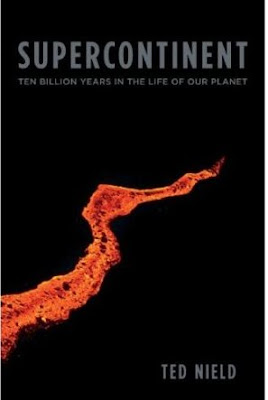
Supercontinent by Ted Nield


Just finished reading this book. Picked it up in a bookstore after the earthquake in Italy April 2009.

Great book to get you started to know about everything you want to know about how the earth evolves over thousands, millions, billions of years. Nield describes the evolution of the earth from the beginning, about 4.7 billion years ago. How geologists and anthropologists interpret fossil, sedimentary and other evidences to see what has happened in the past. How the continents were built and evolved into different formations over millions of years. How oceans and mountains are built over thousands of years in the same processes that cause earthquakes and tsunamis and volcanoes.

Evidences on early life suggests that simple single-celled life started around 4.4 billion years ago, but did not evolve into complex life until about half a billion years ago. Dominant life before this time, known as the Precambrian time, were mostly algae-like forms living for about a billion years or so. But changes in the continent distribution from separated islands into one large mass called Rodinia situated in the equator changed the earth atmosphere and transformed earth into a large snowball of ice.

Here's more on this book on Amazon:

To understand continental drift and plate tectonics, the shifting and collisions that make and unmake continents, requires a long view. The Earth, after all, is 4.6 billion years old. This book extends our vision to take in the greatest geological cycle of all—one so vast that our species will probably be extinct long before the current one ends in about 250 million years. And yet this cycle, the grandest pattern in Nature, may well be the fundamental reason our species—or any complex life at all—exists.

This book explores the Supercontinent Cycle from scientists' earliest inkling of the phenomenon to the geological discoveries of today—and from the most recent fusing of all of Earth's landmasses, Pangaea, on which dinosaurs evolved, to the next. Chronicling a 500-million-year cycle, Ted Nield introduces readers to some of the most exciting science of our time. He describes how, long before plate tectonics were understood, geologists first guessed at these vanishing landmasses and came to appreciate the significance of the fusing and fragmenting of supercontinents.

He also uses the story of the supercontinents to consider how scientific ideas develop, and how they sometimes escape the confines of science. Nield takes the example of the recent Indian Ocean tsunami to explain how the whole endeavor of science is itself a supercontinent, whose usefulness in saving human lives, and life on Earth, depends crucially on a freedom to explore the unknown.
He ended the book with a description on the Indonesian earthquake 26 December 2004 that created the tsunami around the Indian ocean.

Book: Evolution - A theory in crisis


Currently reading this book now, by a molecular biologist Michael Denton. Really interested to know what the fuss is about on the Darwin theory of evolution. It's like this single theory has made and is making so many people atheists more than any other things in life.

I do believe that evolution works to a certain extent to produce genetic variations at small and large scales (this is now done easily on laboratory environments). But I don't think that the Theory of Evolution intrinsically applies that the universe has no Creator. It's just that many people who think so desperately wants to interpret the theory as such, that everything naturally comes about and changes gradually without any need to be created or even controlled.

I'll add more on this later...